
— PROJECTS
269,844 hectares over Alberta’s largest lithium fairway.
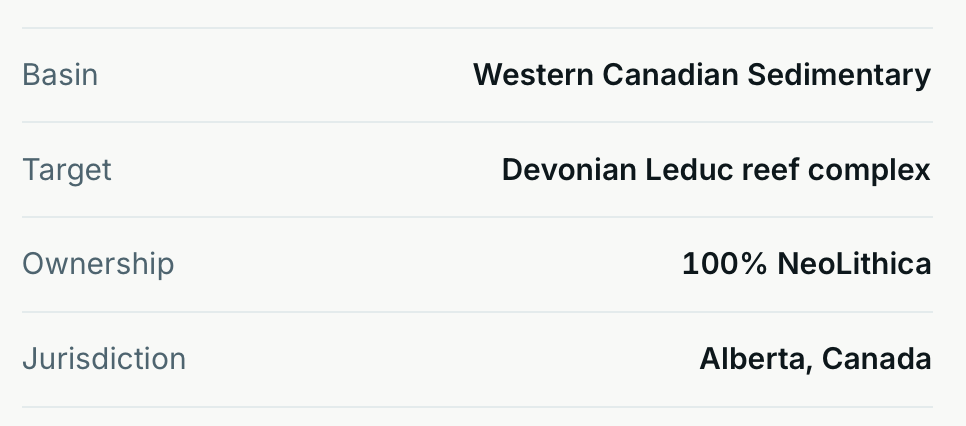
Two 100%-owned brine projects in the Western Canadian Sedimentary Basin — one at resource scale, one already producing brine at surface.
— WHY THIS BASIN
A century of subsurface data, pointed at a new commodity.
The Western Canadian Sedimentary Basin is one of the most densely characterized subsurface environments on the planet. Decades of oil and gas drilling produced the well logs, formation-water analyses and pressure data that a lithium brine resource estimate depends on — data that in most jurisdictions would take years and tens of millions of dollars to acquire.
NeoLithica’s land position targets the Devonian Leduc reef trend, where warm, saline, lithium-bearing formation water sits in porous carbonate with good deliverability.
— FLAGSHIP · 100% OWNED
Two projects on the same play.
Flagship
Peace River
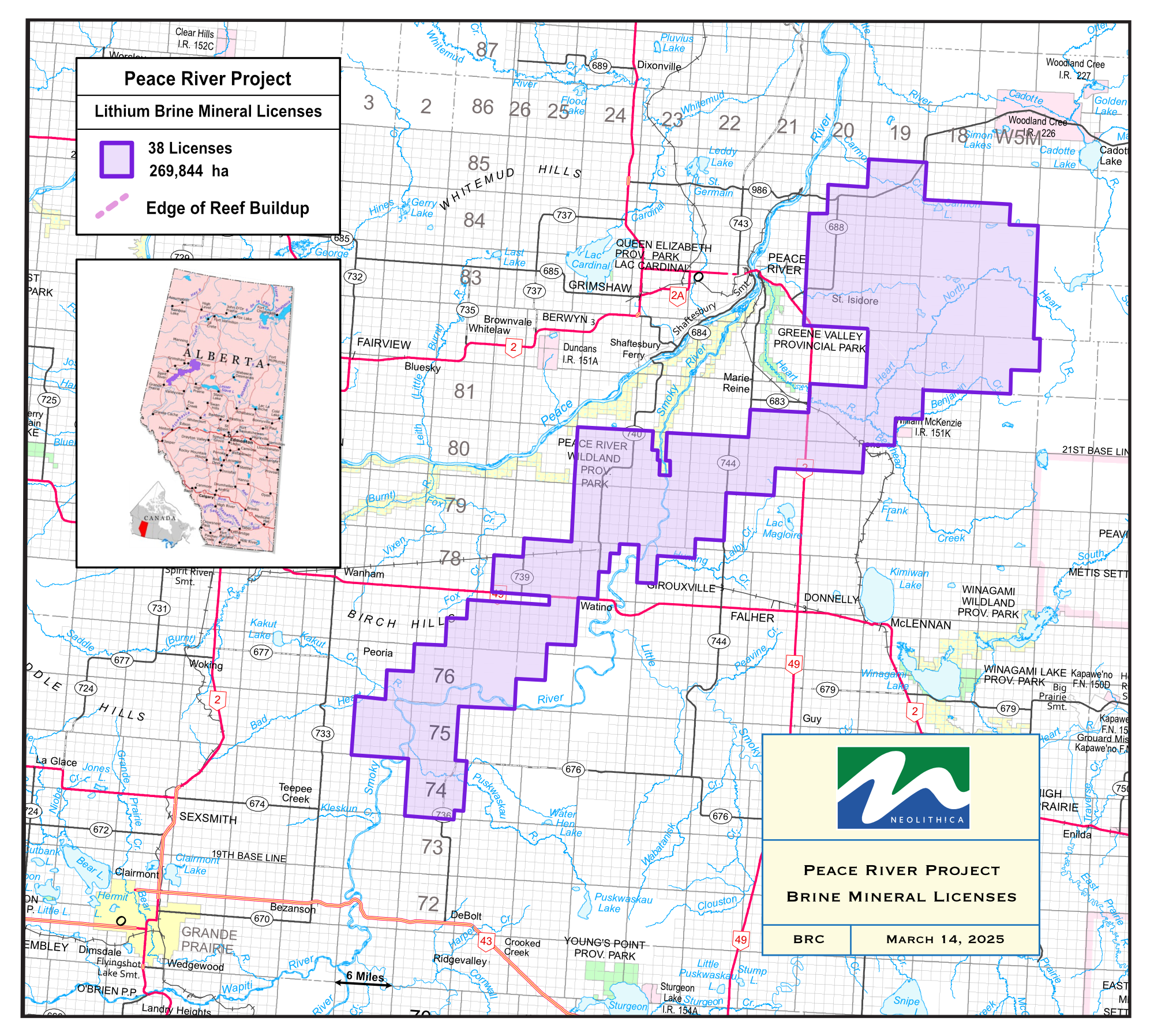
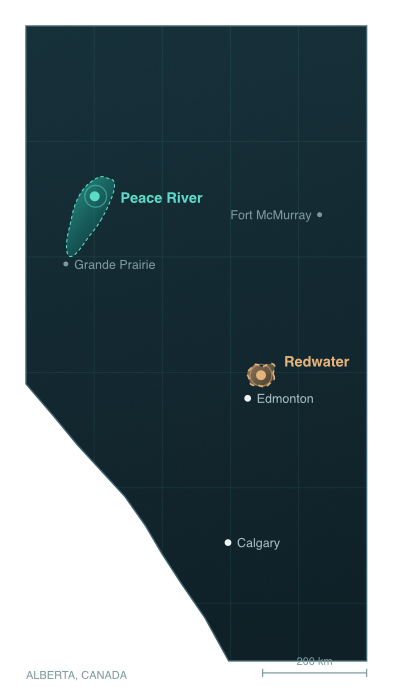
269,844 hectares over a 165 km lithium-brine fairway, roughly 500 km north-west of Edmonton, with multiple productive aquifers and established regional infrastructure.
Near Term
Redwater
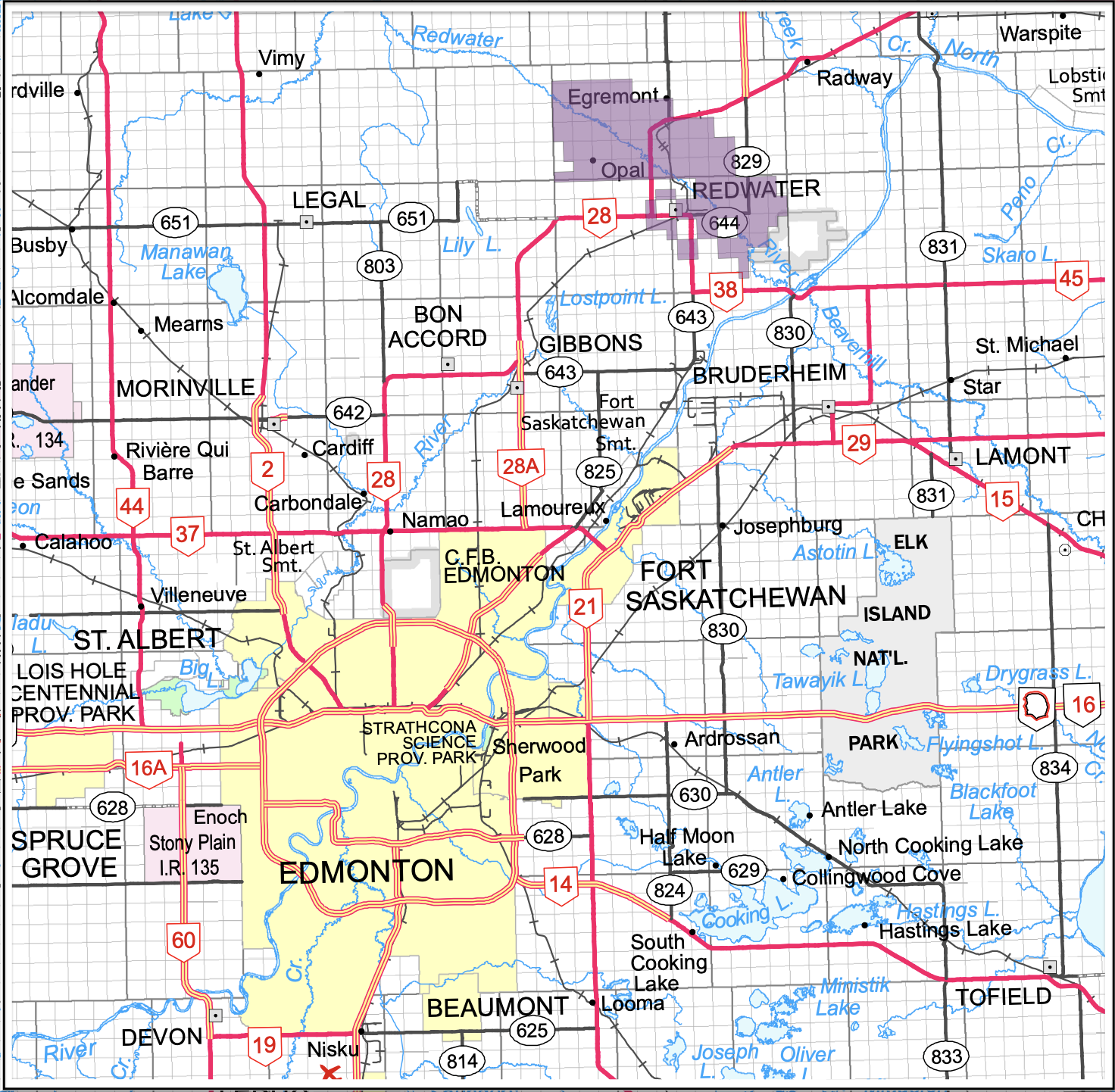
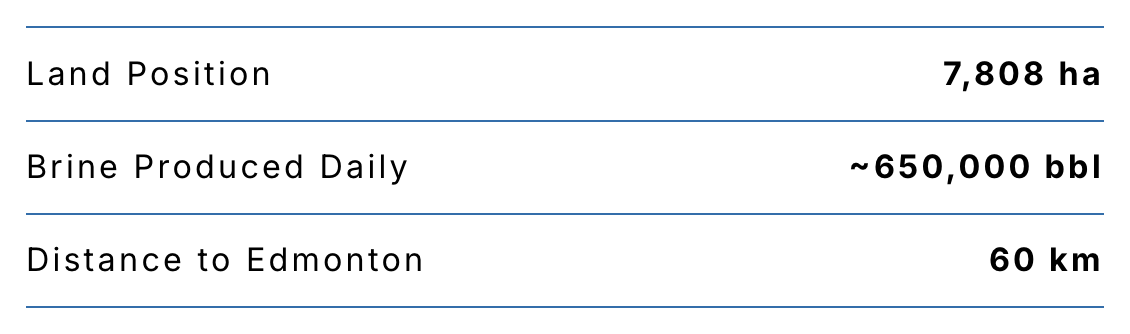
7,808 hectares over the Redwater Leduc reef complex, 60 km north-east of Edmonton — where roughly 650,000 barrels of lithium-bearing brine are already produced every day.
— TECHNICAL DISCLOSURE
The Resource Estimate.
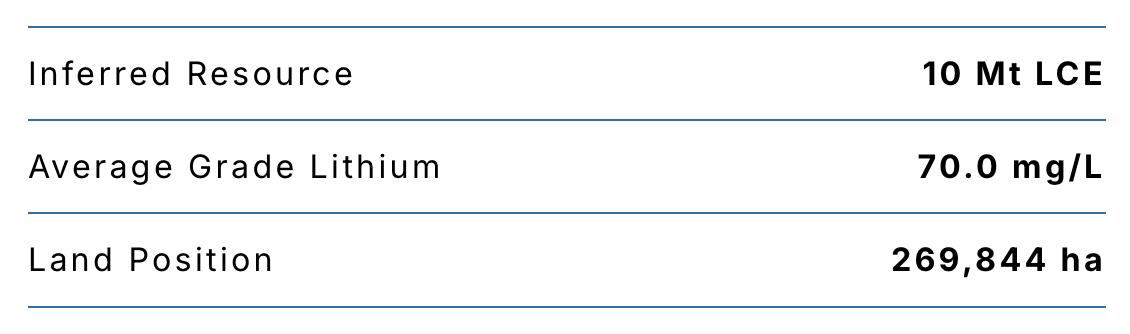
Independent, NI 43-101 compliant, and classified as inferred.
Peace River Project — summary of the independent technical report.
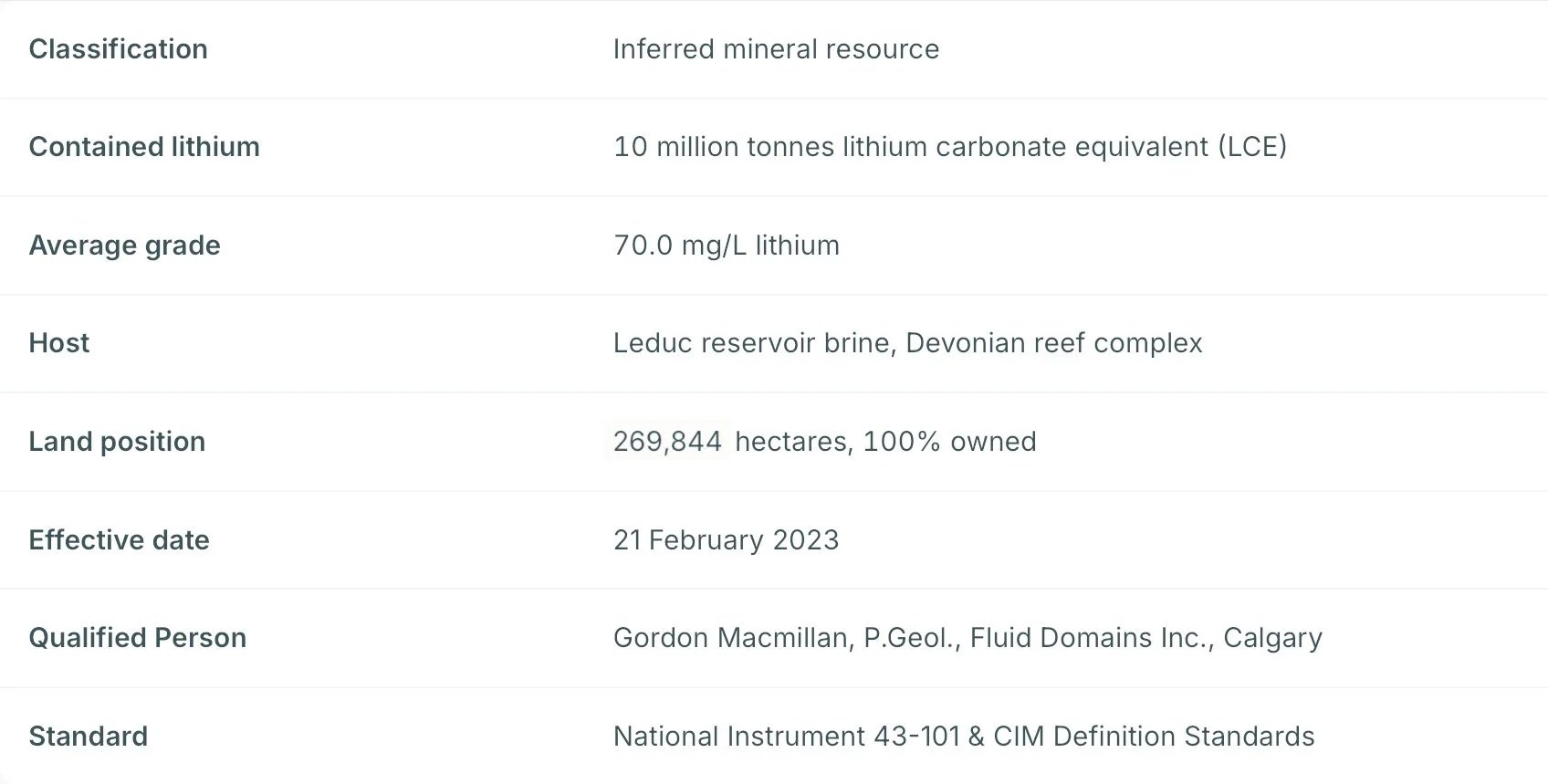
An inferred mineral resource is the lowest confidence category in the CIM standards. It is based on limited sampling and geological inference. Inferred resources are not mineral reserves, they do not have demonstrated economic viability. NeoLithica’s development plan is built around the drilling and testing needed to reduce that uncertainty.