

Redwater —A Fast Path to Commercial Production
— NEAR TERM PROJECT
An operating oil pool, an approved pilot, and a lithium-bearing brine stream already flowing to surface.
— REDWATER PROJECT
The potential to become an early-mover lithium producer
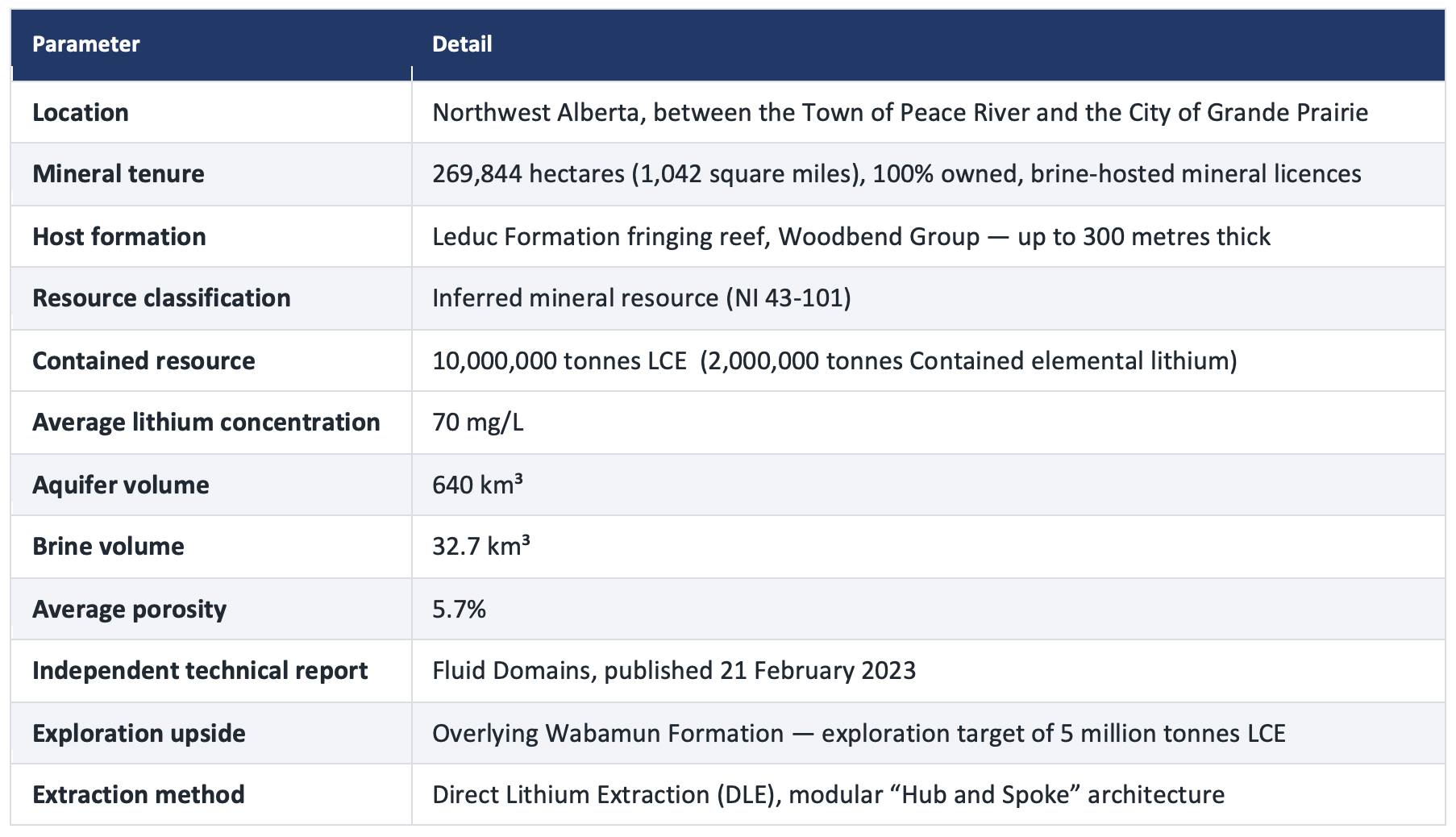
The Redwater Lithium Project is NeoLithica’s near-term asset and the proving ground for its production model. It comprises two brine-hosted mineral licences totalling 7,808 hectares over the Redwater oil pool, roughly a forty-five-minute drive northeast of Edmonton, Alberta’s capital.
The Redwater oil pool is operated by privately-owned Conifer Energy Inc., and produces approximately 100,000 cubic metres — some 650,000 barrels — of lithium-bearing brine to surface every day, through wells, pumps and gathering infrastructure that exist today and are already permitted. NeoLithica does not need to drill a single well, build a single pad, or secure a single new surface lease to reach a large, continuous, real-world brine stream. It simply needs to intercept an existing waste stream before it is re-injected.
NeoLithica has received government regulatory approval to conduct demonstration pilots at Redwater, in collaboration with Conifer Energy on their operating lease. That approval, on an active and already-permitted oil pool, is what turns a laboratory result into verified pilot-scale production without the multi-year permitting and environmental assessment timeline a standalone facility on undeveloped land would require.
— PROJECT AT A GLANCE
— WHY REDWATER
A reservoir that kept its lithium
Redwater is a very unusual reservoir. Unlike virtually every other mature oil pool in Alberta, it has never undergone enhanced oil recovery — the practice of pumping fresh, non-lithium-bearing water into the aquifer to improve oil recoveries.
That distinction matters more than it might first appear. Enhanced oil recovery on a mature oil pool dilutes the lithium concentration in the brine, and in doing so eliminates that pool’s potential as a source of lithium extraction. Redwater’s brine retains its original chemistry. Decades of production have brought it to surface without ever washing the lithium out of it.
Speed and capital efficiency
The most direct benefit of that position is time. A greenfield pilot requires site preparation, well drilling and disposal infrastructure before a single litre of brine can even be tested. At Redwater, the wells, the pumps, the gathering system and the disposal wells are already in place, already permitted, and already moving lithium-bearing brine every day. This is a fundamentally different capital profile, and it presents NeoLithica with an opportunity to enter lithium production relatively quickly without incurring large outlays of capital.
— EXTRACTION VALIDATED
Extraction validated on Redwater brine
In December 2024, Candle Lithium Corporation — a Direct Lithium Extraction technology developer headquartered in Edmonton — completed an independent bench-scale programme on Leduc Formation brine drawn from the Redwater Project, evaluating its proprietary sorbent across both semi-batch and continuous operating modes.
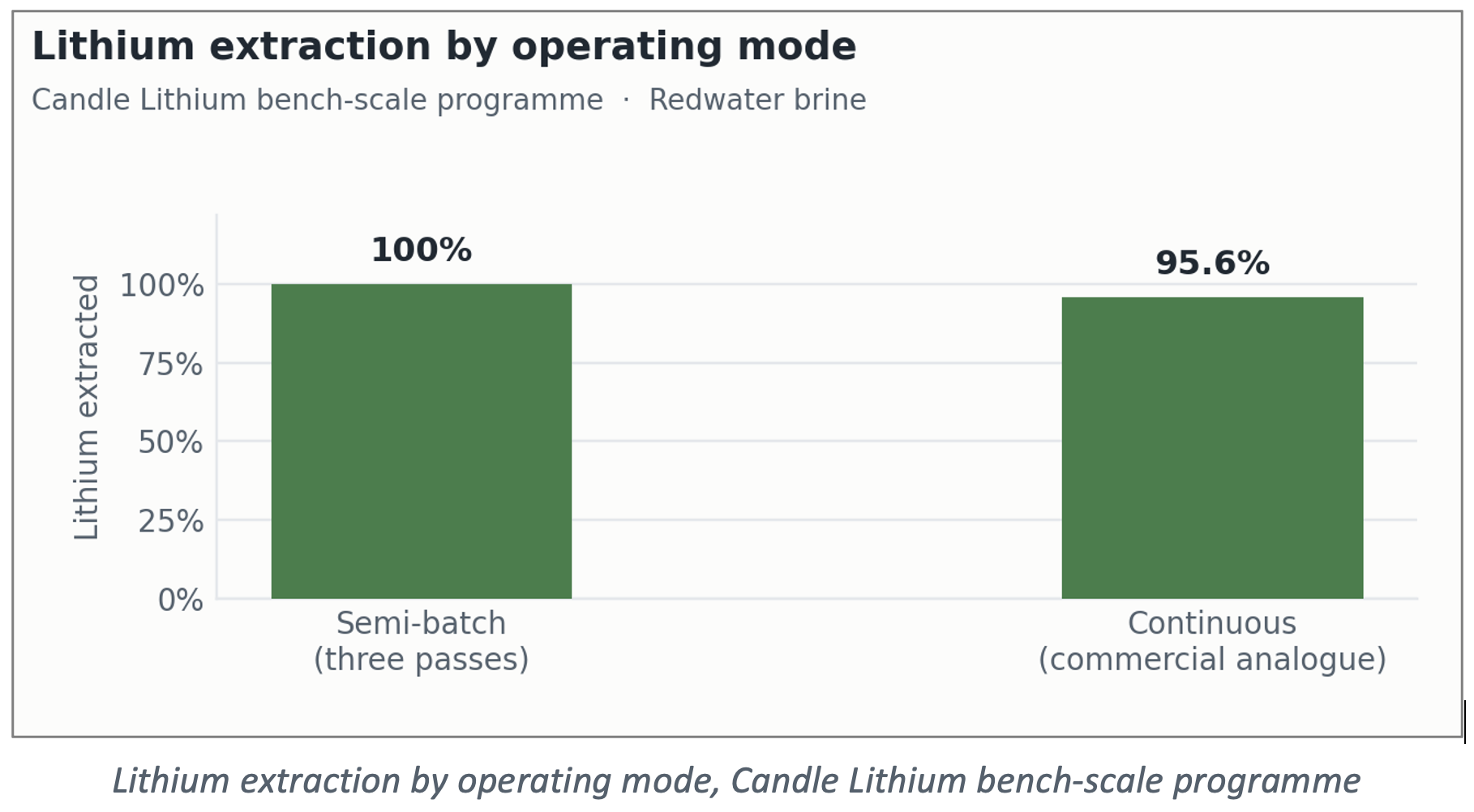
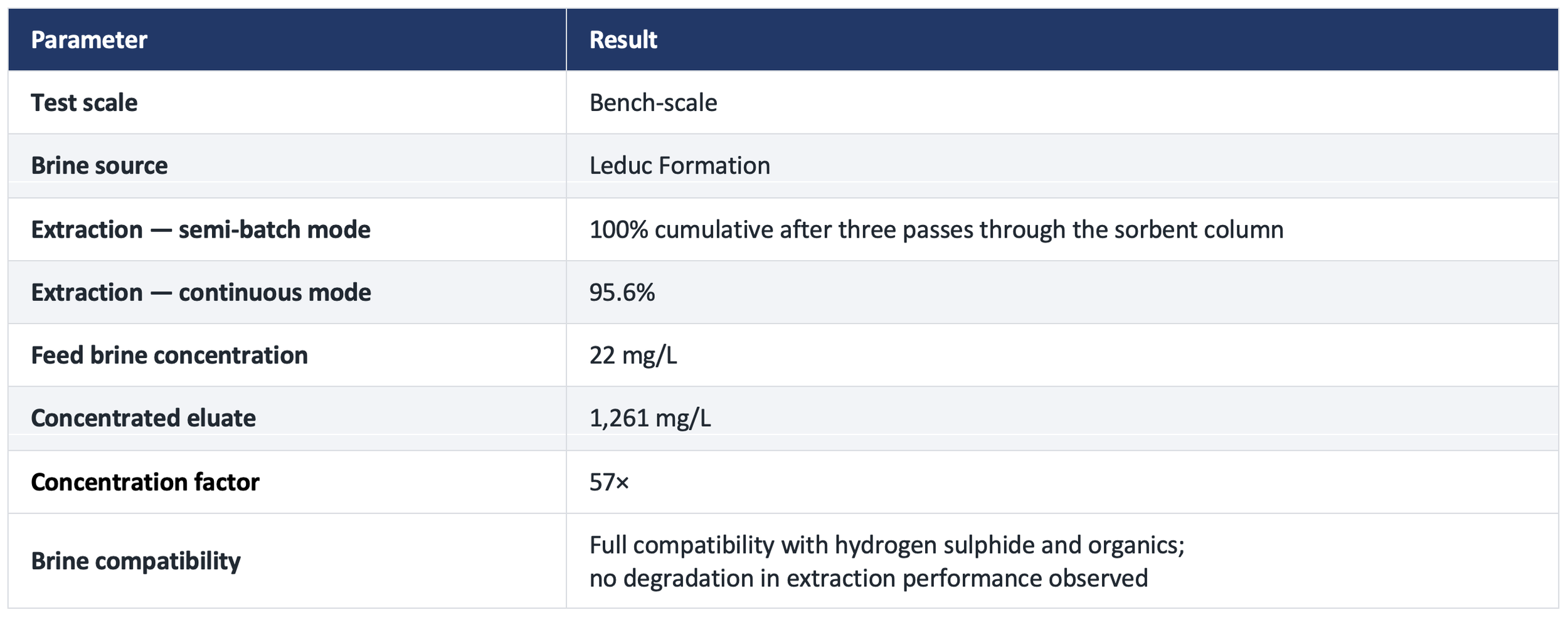
At an optimised brine pH of 8, semi-batch testing achieved cumulative lithium extraction of 100% after three passes through the sorbent column. In continuous mode — the configuration more representative of commercial operations — the process extracted 95.6% of the lithium from a 40-litre brine sample.
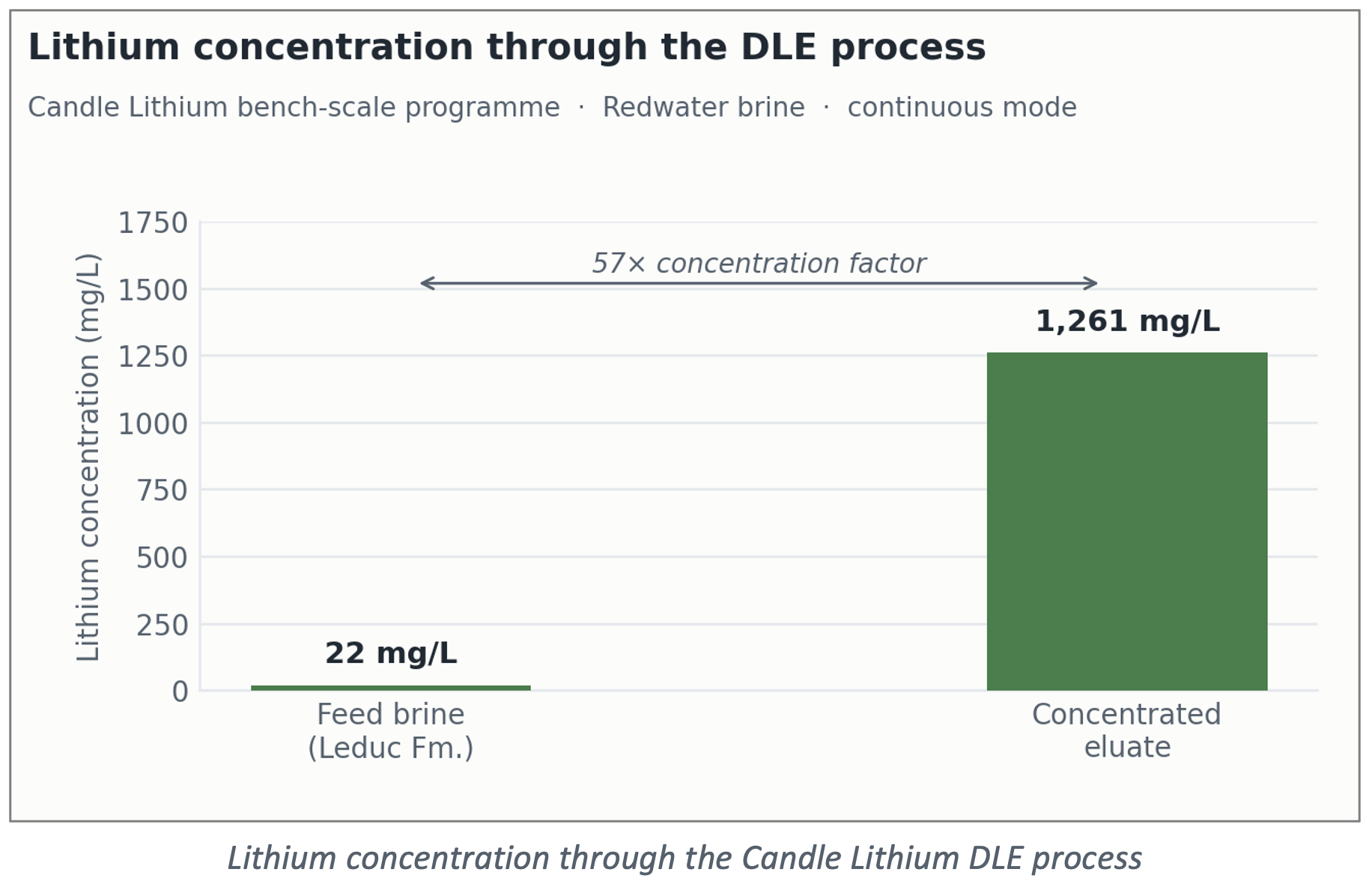
The programme concentrated the lithium from 22 mg/L to 1,261 mg/L, a fifty-seven-fold increase. Selectivity for lithium over competing ions was strong and improved with scale, with Li/Na and Li/Ca selectivity factors reaching 495 and 78.6 respectively in continuous mode.
The most commercially significant finding was not the recovery rate but the compatibility. The sorbent demonstrated full compatibility with the hydrogen sulphide and organics present in Redwater’s oilfield-brine, with no degradation in observed extraction performance. Real oilfield brine is chemically messy in ways that synthetic test brines are not, and tolerance to that chemistry is the difference between a process that works in a laboratory and one that works on a wellsite.
Candle Lithium bench-scale programme results
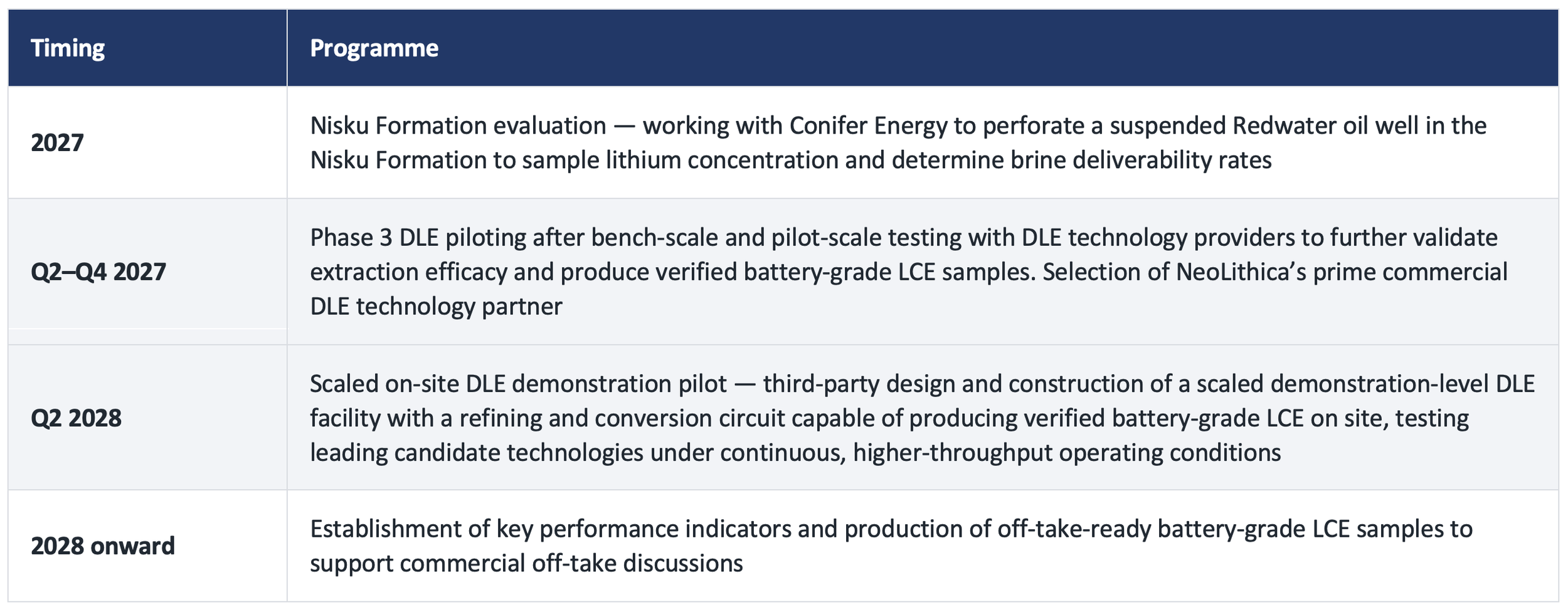
Redwater is one of two independent, brine-specific DLE validations NeoLithica has commissioned. Geo40 Limited completed a parallel pilot-plant programme on Wabamun Formation brine from the Peace River Lithium Project, achieving 97% average lithium recovery and producing a battery-grade lithium carbonate sample exceeding 99.9% purity against Albemarle and SQM commercial specifications. Together, the two programmes demonstrate high-rate lithium recovery using commercially available technology from two chemically distinct oilfield brines within the Company’s tenure. NeoLithica expects to select its prime commercial DLE technology partner in 2027.
— PRODUCTION POTENTIAL
Production potential and Nisku upside
Although the lithium concentration in the Redwater Leduc Formation is relatively low at approximately 25 mg/L, the Project has been selected by NeoLithica as an ideal setting in which to test rapid Direct Lithium Extraction technologies — precisely because the brine volume is large, continuous and already at surface.
NeoLithica forecasts that up to 3,500 tonnes of lithium carbonate equivalent could be produced annually at Redwater, with DLE plants deployed across the oil pool at existing disposal wells, where Leduc Formation-bearing lithium would be extracted before the brine is injected back into the formation.
A further opportunity exists in the overlying Nisku Formation, where lithium concentrations may reach 40 mg/L — potentially more than doubling annual LCE production from the site. NeoLithica will work with Conifer Energy to perforate a suspended Redwater oil well in the Nisku Formation in order to sample the brine and determine both its lithium concentration and its deliverability rates.
— STRATEGIC ROLE
Two assets on different clocks
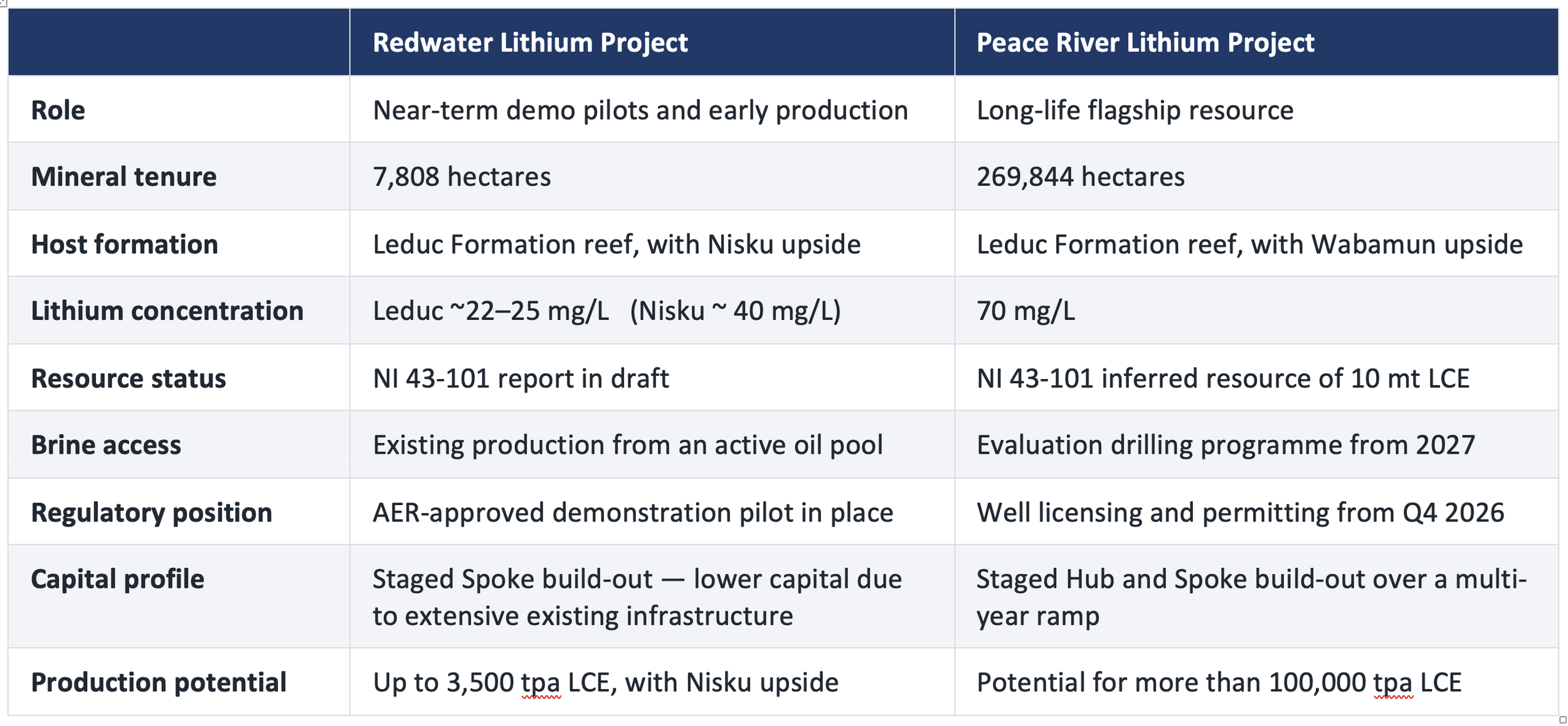
The Conifer Energy relationship diversifies NeoLithica’s execution risk across two assets moving at different speeds. Peace River is the long-life flagship resource, requiring a multi-year, staged Hub and Spoke build-out. Redwater is smaller, faster and lower-capital — an opportunity that can reach commercial validation, and potentially cash flow, well ahead of Peace River’s larger development timeline.
Success at Redwater does more than generate near-term revenue. It functions as a live, de-risked proof of the Company’s entire operating thesis: on a real brownfield asset, using a real industry partner, under a real regulatory approval already secured. Scaled demonstration pilots are designed to establish key performance indicators and produce verified battery-grade LCE samples. Through its accelerated development of the Redwater Project, NeoLithica could potentially become a first-mover commercial producer of battery-grade lithium carbonate equivalent in western Canada.
How the two projects compare
— DEVELOPMENT PATHWAY
Development pathway, 2027–2028
— ENVIRONMENTAL PROFILE
Working inside an existing footprint
Redwater represents an unusually low-impact route to lithium production. Leduc brine is already being lifted, treated and re-injected as part of an existing oil operation; NeoLithica’s process intercepts that stream, removes the lithium, and returns the brine to the same disposal wells. No new land is disturbed, no new water is consumed, and no evaporation ponds are required. More broadly, Direct Lithium Extraction uses less land and water and produces fewer greenhouse gas emissions than hard-rock mining or solar evaporation, and it operates year-round independent of weather or climate.
— CLOSING
The shortest distance to production
NeoLithica’s ability to pilot at Redwater — on Conifer Energy’s operating lease, with Alberta Energy Regulator approval already in hand — is one of the most practically valuable assets in the Company’s development strategy, and arguably more valuable in the near term than its scale would suggest. It materially shortens the distance between a successful laboratory result and verified pilot-scale production.
Forward-looking statement
The proceeding contains forward-looking statements and information, including projections of resource volumes, production rates and development timelines. Such statements are based on NeoLithica’s current assumptions, estimates and expectations, and are subject to significant risks and uncertainties, many of which are beyond the Company’s control. Actual results may differ materially from those expressed or implied. Nothing on this page constitutes an offer to sell, or a solicitation of an offer to buy, any securities, or investment, legal or tax advice.