
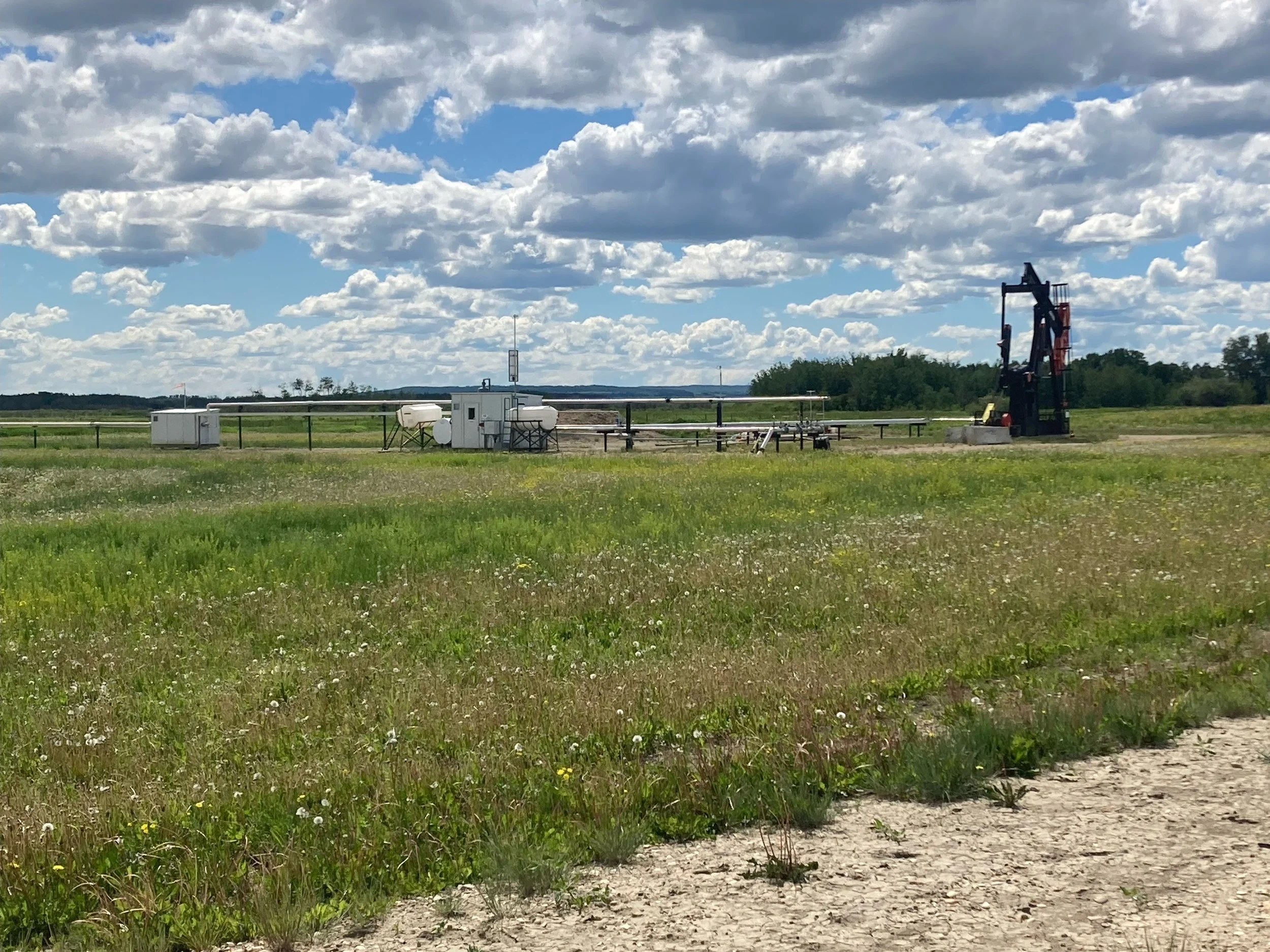
Peace River Project
Our Flagship Lithium Project
The Peace River Project is NeoLithica’s flagship lithium asset, situated in northwest Alberta between the Town of Peace River to the north and the City of Grande Prairie to the south. A large Leduc Formation fringing-reef complex, reaching a thickness of 300 metres, hosts an estimated 10 million tonnes of LCE based on the Company’s NI 43-101 Technical Resource Report (Fluid Domains, February 2023), with the overlying Wabamun Formation offering potential for an additional 5 million tonnes of LCE.
The Peace River Lithium Project is positioned within one of the most extensively developed hydrocarbon corridors in western Canada. NeoLithica’s 269,844-hectare land position at Peace River makes it one of the largest single lithium resource projects in Alberta, and one of the largest license positions among its direct western Canadian peer group.
The lithium enrichment traces back to the Peace River Arch, an ancient zone of structural disturbance that generated the permeable pathways through which lithium-bearing fluids migrated into the surrounding aquifers. This setting has been independently quantified in NeoLithica’s NI 43-101 Technical Resource Report and, at the extraction level, independently validated by Geo40’s 2025 DLE pilot-plant test on Peace River brine that achieved 97% average lithium recovery and produced a battery-grade lithium carbonate sample exceeding 99.9% purity against Albemarle and SQM commercial specifications.
First Class Infrastructure
Few emerging lithium jurisdictions can offer what decades of oil and gas development have already built across this region: an extensive network of roads, rail, electrical power, well sites, and pipelines, constructed to support a mature hydrocarbon industry rather than requiring new construction for a lithium project. That same industry has built a deep bench of directly transferable technical talent in drilling, reservoir engineering, and subsurface fluid handling — an advantage reflected directly in NeoLithica’s own technical team.
The Peace River Project is envisioned as a multi-generational critical minerals asset rather than a single mining operation. The extensive geographic footprint and NeoLithica’s “Hub and Spoke” DLE production architecture enables multiple production centres to be developed over time, allowing production capacity to expand in response to market demand while preserving significant resource inventory for future generations. The Peace River Project has the potential to produce over 100,000 tonnes of LCE annually.
Alberta’s Competitive Advantage
Operating entirely within Alberta provides significant competitive advantages over many international jurisdictions, beginning with the fundamentals that institutional investors weigh most heavily before committing capital to infrastructure-style assets: predictable production, stable operating costs, long-term cash generation, political stability, transparent regulatory oversight, secure mineral tenure, and established property rights. These are the characteristics that determine whether a project can be financed and developed predictably, rather than becoming hostage to the kind of regulatory or expropriation risk that has disrupted lithium projects in less stable jurisdictions.
This policy foundation is matched by physical readiness on the ground. Reliable electrical infrastructure and extensive road and pipeline networks are already in place, built up over decades of oil and gas development rather than requiring new construction to support a lithium project. That same industry has left behind a deep pool of experienced drilling and petroleum engineering expertise, directly transferable to brine-based lithium development, alongside strong environmental regulatory frameworks that provide a clear and well-understood permitting pathway.
Taken together, these characteristics position the Peace River Lithium Project as a credible platform for large-scale, long-life battery-grade lithium carbonate supply. Against a backdrop of rising global lithium demand, continued supply concentration in Australia, Chile, and China, and tightening North American and European policy pressure to diversify critical mineral supply chains, the Project is positioned to become a significant, stable, and geopolitically secure source of battery-grade lithium carbonate for the North American EV and battery energy storage industries for decades to come, precisely the combination institutional and infrastructure-oriented investors look for when evaluating long-duration critical mineral assets.