
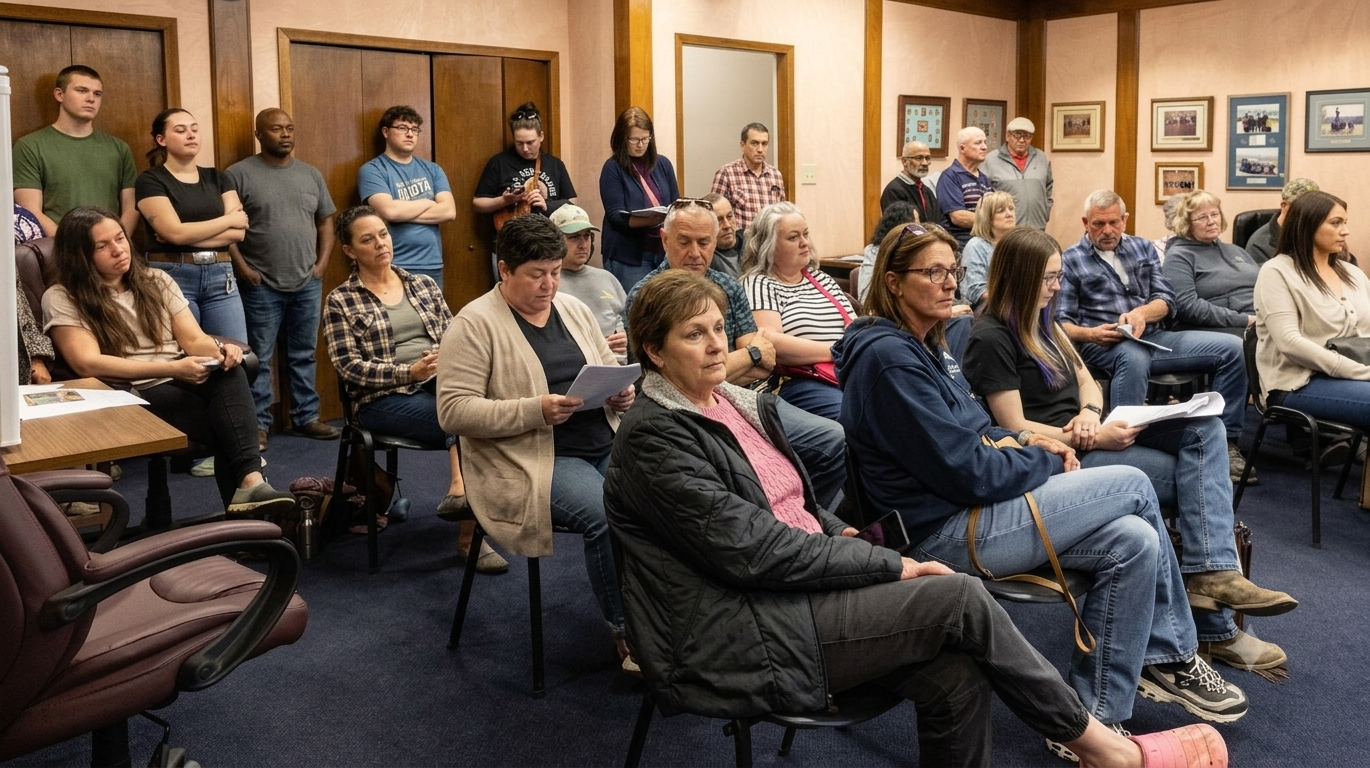
Consultation Isn't a Checkbox.
It's Built Into Our Plan.
Our Commitment to Community
NeoLithica isn't just developing a lithium resource — we're building a long-term presence in the Peace and Redwater regions of Alberta, and we take seriously what that presence means for the people who live there.
Since our founding in 2021, we've believed that critical mineral development only works if it works for everyone with a stake in it: the local communities near our project areas, the Indigenous communities whose traditional territories include our land positions, and the provincial and federal governments responsible for stewarding Alberta's resources. Real project timelines are measured in years, but the relationships that make a project succeed take just as long to build — which is why we started building them early.
That's why NeoLithica has a dedicated role for Government and First Nations relations, and why consultation with government, and local stakeholders and Indigenous communities is written into our development plan ahead of commercial production — not treated as a formality to clear once a project is already built. We see this as an ongoing conversation, not a one-time approval to check off.
A Different Kind of Extraction
Part of what makes this commitment credible is the technology itself. NeoLithica uses Direct Lithium Extraction (DLE) to draw lithium from Alberta's formation brines. Traditional lithium comes from one of two places: vast evaporation ponds in South American salt flats, where brine sits exposed for a year or more before lithium can be concentrated, or open-pit hard-rock mines, which require blasting, crushing, and managing large volumes of tailings. Both consume enormous amounts of land and, in the case of evaporation, significant fresh water in often water-scarce regions.
DLE works differently. Lithium is extracted from brine in a matter of hours, not months. The brine — now stripped of lithium — is reinjected into the same formation it came from, rather than left in an open pond. And because NeoLithica's projects sit on land already shaped by decades of oil and gas development, we're building on existing roads, pipelines, power infrastructure, and a skilled regional workforce. That reuse matters: it means a meaningfully smaller land footprint and less new disturbance than a conventional lithium project would require, in a region that already knows how to work alongside resource development.
Investing in Local Talent
Alberta's Peace and Redwater regions already have what NeoLithica needs most: a deep bench of skilled workers with decades of oil and gas experience in drilling, reservoir engineering, and subsurface fluid handling — skills that translate directly to Direct Lithium Extraction. We intend to prioritize hiring locally and drawing on that experienced energy-sector workforce as we build out our operations, rather than importing labour from outside the region.
We also plan to work with local and regional educational institutions and trade training programs to help develop the next generation of workers our industry will need, including opportunities for oil and gas workers to build on their existing expertise as the region's energy economy diversifies into critical minerals. As our development plan advances, we'll share more details on the specific training and education partnerships we will put in place. Our goal is straightforward: the people who already call this region home should be the ones building its lithium industry.
Built Within Alberta's Framework, Not Around It
NeoLithica's development plan is built on Alberta's existing regulatory framework for critical minerals, including the Mineral Resource Development Act — legislation shaped with input from a Mineral Advisory Council that included Indigenous organizations. We see that framework as a floor, not a ceiling: a starting point for consultation, not a substitute for it.
We also recognize that our responsibility extends beyond our project boundaries. NeoLithica maintains active relationships with provincial and federal institutions because we believe critical mineral development succeeds when industry, government, and community stay in step with each other.
Our Peace River Project is envisioned as a multi-generational asset — one that can support production for decades. That kind of timeline only works if the relationships underneath it are built to last just as long. We're committed to earning that trust, one conversation at a time.